
Library / Podcast
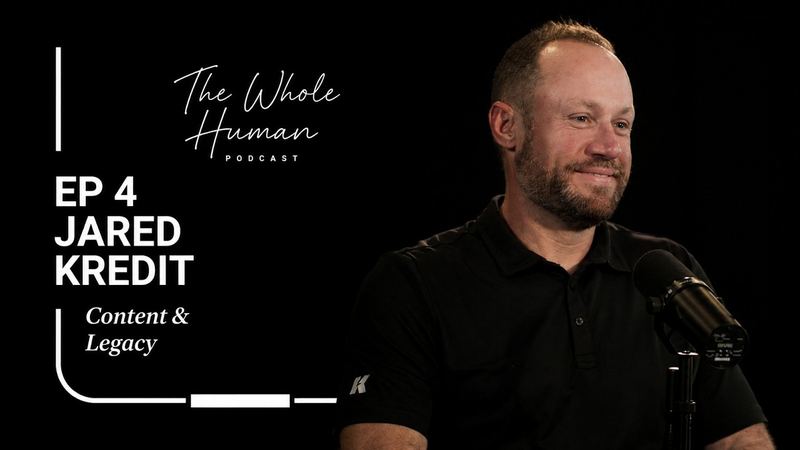
In this episode
Andy and Jay sit down with Jared Kredit — born and raised in Phoenix, a follower of Christ, husband to Natalie for nearly 17 years, father of three, and the owner-operator of K2 Electric, an industrial and commercial electrical contractor with just under 300 people working across Arizona. He joined the company his dad started, full-time, in 2008 after setting out to be a doctor. The conversation moves from the leadership mindset that survives a season of change to raising kids who still play and build things, why “contentment” is his word of the year, what stays human when AI is faster than you, and the one memory he never wants to lose.
Key takeaways
- Adaptability is the leadership skill of this season. Not just early adoption, but constantly asking “is this working?” and pivoting when the original plan isn’t — without having to become someone you’re not.
- “I’m not going to find contentment unless I seek contentment.” Two years of a lean journey plus fast growth left Jared chasing the next thing and bleeding discontent into home. So he named it, put it on LinkedIn, and made it his word of the year.
- Contentment is not working less. “It’s not that you stop working hard. It’s that you have a peace on the inside about who you are, that you are enough.” Jay’s version: gratitude mixed with drive.
- Fatherhood means time. The TAD acronym Andy carries from his marriage and family therapy training — time, attention, affection, direction — and Jared’s resolve to stop declining when his seven-year-old asks to wrestle.
- Let boredom happen. Screens out, play in. Boredom is where a kid’s creativity comes from, and play with no outcome attached is a freedom most adults have lost.
- Invest in what makes you inherently human. However fast or smart you are, a tool will beat you at it. Wisdom, presence, creativity, and emotion are the skills that hold up as the roles inside jobs start to vaporize.
- A robot learns instantly; a leader teaches EQ. Communication and hard conversations can be taught, and the reward is exponential — it ripples into homes and communities. “I don’t see the machines ever being able to replicate human interaction the way that two humans can do it together.”
- Choosing hard is a reflection of character. ChatGPT-written repair letters skip the churn that grows a person, and an always-affirming AI can become an echo chamber. Fitness is the daily rehearsal: the joy on the other side only comes through the suck.
Chapters
Transcript
Auto-generated from the episode and lightly edited. Timestamps mark the start of each section; a new line marks a change of speaker.
00:00
They’re like, “Man, I love those buff dudes.” Like, it’s so great following them. They have this new—
Now there’s another buff dude in the—
Allowing boredom to happen so that their creative side can come out.
I think there’s a specific mindset of a leader that will thrive during this season and a specific mindset of a leader that’s going to kind of get left—
00:19
If you’re just all in all the time, driving, driving, driving, driving— I’m thankful that I have this, and this is beautiful that I have this. Of course, I’m hungry for more, but I’m so thankful that this is even something that’s been given to me. I know nothing about what you do for your career, for hobbies, for just you as a person. So imagine — put me in the audience’s perspective. They see, they follow Jay and Andy, and they’re like, “Man, I love those buff dudes. It’s so great following them. They have this new podcast.”
Now there’s another buff dude in the—
Yeah, now there’s another buff dude. And I’d love to just — if they like this guy, why should I like this guy? So tell me your ChatGPT version of who you are and what you stand for, what you do for your career, just things that you love in life. Let’s hear it.
01:27
Yeah. So, Jared Kredit, born and raised in the Phoenix, Arizona area. A super important part of my life is my faith and my family, so I’ll touch on those. Faith for me, as it is probably for many, is a lifelong journey, but I’m a follower of Christ, and that plays into a lot of what I do and who I am. It forms a lot of how I at least try to show up in the world. Family — in particular my wife, Natalie. We’ve been married for coming up on 17 years. We’ve got three beautiful children, Asher, Stella, and Tessa. They’re all elementary to middle school age, so we’re running hard all the time. But staying present with them is a big part of who I am and what I try to do, and that is challenging at times. I own and operate K2 Electric. We’re an industrial and commercial electrical contractor, so primarily we work with general contractors, either building new or renovating facilities in the industrial and commercial space. I lead a team — right now we’re a little under 300 folks. We operate throughout the state, and we’re focused right now on a lot of manufacturing coming into town, a lot of data centers, which has been in place but is accelerating with the AI boom. Arizona’s a great spot. We’ve got chip manufacturing. We kind of have the whole life cycle of all the new tech going on, so that’s been a welcome transition for our industry — kind of a 20-plus-year transition for Arizona into advanced manufacturing and more sophisticated construction builds. And ultimately it’s great for our population; those industries serve the population better in terms of employment opportunities. So I’m really excited for that opportunity and just the team that I get to lead, and trying to move forward in kind of a wild time, both specifically in our industry and in business as a whole. AI, obviously — everybody’s talking about that — but our industry is probably one of the least innovative if you look over the last 100 years or so. We actually have lost efficiency as an industry. Most industries have this crazy curve of efficiency gain, and we’ve had some, but I think in the last 10 years the data shows that we’ve regressed a little bit. Ultimately, it’s the way projects get built; there are some structural problems that are really tough to solve that no one’s really figured out. And then there’s been a lot of push to get folks into college, and that pulled good people away from the trades, and the ones that are experienced are retiring out. So as an industry, we haven’t really solved that.
So it’s kind of an interesting time, and it just gives us some good stuff to work on. I think a lot about how things are changing in culture, but also in the workplace, with people that I work with and our conversations in different industries. One of the things I think about is the type of leaders that will emerge during this time. I think there’s a specific mindset of a leader that will thrive during this season and a specific mindset of a leader that’s going to kind of get left behind. So as you think about that for your team, what mindset have you decided to take on to lead your company through this season of innovation and change? And what are some of those qualities that you’ve found are really significant?
Yeah, I think the big thing for me — and I feel fortunate that this is behaviorally kind of how I show up in the world — is being adaptable. I think being adaptable is incredibly important. It always has been, but it’s even more so now. And it’s not just adapting to the technology and the change in terms of being an early adopter. Right now we’re doing some adaptation where we were pursuing some things and weren’t having success. So it’s like, hey, even within this progress we know we need to make, the original plan wasn’t quite working. We need to make some adjustments. So as you’re moving forward, it’s also constantly assessing: is this working? What pivots do we need to make? So I think adaptability is probably one of the most important leadership attributes, tactically. There’s a lot in terms of how you connect and work with humans relationally, but tactically, I think that’s it.
06:16
I remember when we worked out a couple of weeks ago and we were sitting in the sauna, talking about this conversation around the importance of flexibility moving forward, just with human beings. The feeling I get often now is that there’s so much change and adaptation taking place that it’s hard to even think about where to start and what to focus on. And I think you made a good point: there’s an opportunity for leaders to not have to change who they are to move forward, but to figure out how their personality and their unique gifts can move them through this season. Flexibility is one of those opportunities. If you’re a leader who likes things structured and ordered, with a plan attached to it, I think it does require a lot of stepping back and going, okay, how do I either do it myself and be more flexible, or find people I can partner with who are better at some of those skill sets? I want to back up for a minute here. Your current career path sounds fascinating, but as a kid — when you’re young and you’re like, I want to be a firefighter when I grow up.
I want to be an astronaut. I want to be an actor. I have a feeling that your current career is not what you said as a kid.
So my question for you is, one, when you were a kid, what did you want to be when you grew up?
07:40
Bodybuilder, for sure. And then after that, how did you even fall into something like this?
Yeah. So I’m sure I had a few different thoughts when I was a child, but the one I can remember the best — because this is what I started my college career on — was that I wanted to be a doctor. I always loved the sciences in school, found them really interesting, and still today I love helping people, helping people solve problems. So marrying that interest in science with helping people — I had a great pediatrician growing up and I was like, I want to do that. I went to the University of Arizona, a fantastic school for medicine, so that all made sense. It’s also a really fun environment. And so quickly I realized I did enjoy science, but there were people that were way smarter than me, and I wanted to have a mix of study and fun at university. So I pivoted away from that. How I got into this: my father got into the trades pretty much right out of high school. He eventually started a business, ran that for a while, sold it, and then when I was starting college, he started up K2 Electric — his second business in the same space.
For the longest time, he was, “Don’t get into the trades. Go to college.” He hadn’t gone to college, so he felt like that was the path to a better opportunity. But as he was getting the business started, I just saw a lot of opportunity. He always really liked the trade side of it, specifically the problems we solve for customers. He liked digging into that. I have some experience in that, but not to the level that he did, and I was going to business school. So I thought, okay, this could be a good partnership: he really likes focusing on solving electrical problems for clients, and I’m really interested in how we make this business operate and make it more scalable. So roughly halfway through college, I decided I was going to join full-time. I would work part-time — it was kind of a precondition of being able to come back home and have a place to sleep that I would go work out in the field — but then I joined full-time in 2008 when I graduated.
09:56
Usually there’s a thread of that childhood desire that’s still in it. Do you see that thread in yours?
Probably being able to help people, help solve problems, right? It comes with that. For me, less so at the project level, but within our team, and especially as I got into roles of leadership, I think that was really strong there. Another thread would be that I like to operate independently. This is less about specifically what we do as a business and more just being a business owner, a business leader. Every day is different, and an adventure. Adventure is a super important thing to me, and entrepreneurship is definitely an adventure. So I think that’s there. And then something I didn’t really recognize when I was younger, but I see it today: fixing actual things. My dad was super handy, so I was always around that. Whether it’s something at home or seeing our teams execute on it, the tangible nature of what we do is super fun. I love being able to go around town, especially with the kids in the car, and say, “Hey, our team built that.” There’s something really neat about that.
There’s something really interesting about, like you said, that tangible aspect of it. Everything is so digital right now, but if you can drive down the road with your kids and point and say, “Hey, I had a hand in that,” there’s something really special about that. And I feel like with AI, with technology, with trying to achieve efficiency, a lot of the tangible human element is — I don’t want to say stripped away from us, but there’s less and less human touch to things and more automation and more efficiency. For you, how do you see a way, with your kids especially, that you can help them? Because I’m working on this with my kids. How can you help them hold on to that tangible thing of working with your hands, or working on something where there’s a physical deliverable or a physical attribute to it — not just throw it in ChatGPT, get it done, let an AI agent get it done — or stepping away from a computer and just being peer-to-peer with somebody? How do you help instill that with your kids?
12:33
Yeah. I mean, that’s something I would say I’m early-stage working on. My oldest is 13.
Mine’s almost 13, too.
Yeah. So I think — well, I’ll go to the younger ones. I think encouraging play is super, super important. Technology is everywhere, even just basic things like TV, right? So trying to limit time in front of a screen and allowing boredom to happen so that their creative side can come out, and eventually that creates play. So there’s the creativity part of it, but there’s a lot, too, around the human connection. Developmentally, it’s super important. We learn boundaries when we’re playing. I go and roughhouse too hard and it’s like, oh, that person didn’t like that. You learn a lot in that, but it’s also just fulfilling. My seven-year-old, more than my other two kids, loves to play. Loves to play. So one thing I’ve been really focused on being better about is trying not to decline that. I wish I could say I was always great about that. I wasn’t. But I’m trying to be better about it. If it’s, “Dad, can we wrestle? Can we shoot hoops?” or whatever the kids want to do, I’m trying to step into play. And if it’s, “Hey, not right at this moment,” making sure that it still happens. So I think when they’re really young, it’s moving them away from screens and into physical play, building things, Legos, whatever. But then as we get into things that are harder to quantify — like, what did I actually do? — some of that is self-reflection. So I’m starting to talk with my son and starting to work on some stuff as he’s transitioning from boyhood to manhood.
14:22
Encouraging self-reflection, whether that’s journaling or however you do that. I think journaling is hugely advantageous. This is still something I’m working on getting good at, because as a leader, oftentimes I can go long stretches where I know I’m doing things, but I’m not really feeling the satisfaction out of it. Until I sit down and really start writing, and then I can be like, oh, okay, I saw this person, I was coaching them, and they made meaningful progress, and that feels rewarding. Or this area of the business was here and now we’ve improved it. Those things take a long time, and if you don’t stop and reflect, you’re not getting that immediate feedback — like when we build a building, it’s done, it’s built, I can see it. So I think those things. And then I’m a big fan of physical fitness, because I think it’s good for us mentally, but for me it’s also something I can very much control, and I just love it. So that’s good, but it’s also an accomplishment, and I can get a lot more immediate feedback on it.
Play. Play, to me, is very different than the outcomes you’re talking about. I’ve thought a lot about what it means to actually play, because two of the things you described — the projects, but also the fitness — there’s an end goal attached to that. There’s an outcome. And I think about play — this is something we often lose very quickly when we get into a professional role or a life of responsibility — we recognize that we have to maintain a certain rhythm to life to have outcomes occur. But with play, there’s often no outcome attached to it. And I think sometimes with kids, we force them out of play into winning a game, winning or losing, a goal or objective on the outside of it. Play, to me, is just as important: to be able to go into something and just dabble with an immense amount of curiosity and discovery, and not even have to answer the question, why am I doing this? Or what do I need to get out of this? That’s a totally different mindset. I see that with my five-year-old especially. He just wants to sit down and go into his world and not have any outcomes attached to it. In fact, when I start to create order in his world — “Well, this person does this” — he’s like, “No, no, Daddy, it doesn’t work that way,” and he messes it all up again. I do think there’s a level of freedom that comes with that kind of play. We were talking about this idea of contentment, and I’d love for you to share a little bit about that. Because for the ability to play, there’s a certain settling that has to happen in our hearts around: what do I have undone? What do I need to get done? Am I enough? Am I doing enough? This frenetic energy. I’d love for you to talk about how you came to this idea of contentment for your year, and maybe how that ties into this concept of play.
17:22
Yeah. So the word-of-the-year concept is new for me. As an organization, we’ve done it for a few years. My wife works at K2, and one of her responsibilities is culture-based initiatives — especially as we’re growing, making sure we’re maintaining that family, values-based feel that has always been there, but maintaining it as we grow. So word of the year is a concept she’s brought in, and it’s something she’s personally done. She challenged me this year, and at first I was a little hesitant, but I was like, all right, I like the idea. What I loved about it more than anything was the thought exercise to get into it. Talking about AI: I used ChatGPT to build me basically a journaling prompt, a series of questions that I went through. That in and of itself was very helpful, just checking myself: where am I at in life? But why I picked contentment: at the beginning of 2023, we started what we’re calling a lean journey. It’s a process in the organization to do a lot of things, but one of them was really pushing heavy into prefabrication, which has been around in our industry for a bit but still isn’t as utilized as it potentially could be. So we wanted to make a push down that path through this lean journey, and then we had quite a bit of growth at the same time. It really strained the organization, from 2023 really even to today, but we’re kind of settling in. And I found myself so often just chasing: what do I need to do next? Constantly putting pressure on myself that it’s not good enough, and I’ve got to do more, or I’ve got to push people to do more. And the reality is, in that time period, we had some good growth. We’ve added some great people to the team.
We’ve improved some processes and systems. A lot of good things happened, but I had no real deep sense of that. I was just frustrated that time is passing by, and it was bleeding over into really all domains of life for me. So I had this discontentment, and that was problematic for me for two reasons. One, I tend to be a fairly positive, optimistic personality type, so I felt like I was changing at my core, and I didn’t like that. But I also realized that there’s an attitude and a choice that I have in this, and I wasn’t making the right choice about how I view these things. So it’s kind of this macro thing, but also at the daily level: I was tired of having a rough day, and then that impacts how I show up at home — some of what I was talking about with playing with the kids and saying no, because there’s always something more to do. So that’s part of my intent as I go into this year: being able to be content with however the day went, but being content when the workday is done. Now I’m going to spend time with my kids or my wife. Just being intentional with that. Because as I was thinking more and more about it, I’m like, I’m not going to find contentment unless I seek contentment. So naming it as a word of the year — and I put it out on LinkedIn, so now it’s public, and I’ve got some accountability to it. And a lot of that ultimately ties back to faith for me, because my discontent is usually self-centered: what should I be doing, and how can I do better? As opposed to seeing myself in a bigger picture, in God’s plan, and where I fit as a leader, and accepting and being good with good enough in my role as a leader, as a friend, as a father, and as a husband. There’s always more work to be doing on that, but also being able to just stop and say, “Okay,
21:23
I did well.”
Yeah. For me, that really hits me kind of hard, because as a self-employed entrepreneur, I don’t have a staff of people. I was talking to Andy when we were setting everything up today: there are just so many things I have to do to complete my job in a day, and there’s never enough time. And then my life is going to suffer a little bit, and unfortunately, I end up choosing work a lot. I end up working a little bit later. I’m on my phone a little bit more, answering emails at 9:00 at night when my daughter’s like, “Dad, hey, Dad, I’m trying to show you something.” I don’t give myself permission, because I feel this immense responsibility. But at the same time, like Andy was telling me, people are usually pretty understanding about not getting a response right away, and if you wait 48 hours, more than likely things are going to be just fine. I know for me, I need to get that mindset of feeling content that whatever time I decide to sign off, the day is done.
I have been working on it a little bit more with my kids. I do work from home; I have an office. They come home from school and they all come in and see me. Just yesterday, my youngest came in and he’s like, “Dad, can you read this to me? I want to read this with you.” It’s a little Action Bible. Usually I would say, “Hey, sorry, but I’m working right now,” but I decided, you know what, sure, why not? I recently saw Matthew McConaughey — the GOAT — and somebody asked him, “What does fatherhood mean to you?” He’s like, “Well, there are a whole lot of answers to that; that’s such a broad question. But for me, it means time.” And I was like, dang it, that’s so true. I know that if I can just give my kids time, it’s going to impact them immensely more than a nice conversation of giving fatherly advice. They’ll see: Dad consistently showed up for me. Dad was consistently there, regardless of how tired or exhausted he was. And I’m really trying to focus on that. When I was in my master’s program for marriage and family therapy, we were talking about how to create healthy families and what helps children flourish. I remember there were four words that I really tried to grab hold of when I think about my relationship with my kids. It’s the acronym TAD: time, attention, affection, and direction. It really comes down to the reality that those are the four most fundamental things I can be to my kids. I can give them my time. I can give them my affection. My attention, which is different than time — it is attunement.
24:30
It is watching them and seeing them, not being in the same room with them and on my phone. It’s being present with them. And then direction: not just letting their life go in places, but stepping in to coach and model and direct. And with your idea of contentment, I do think a lot of people associate contentment with not working hard. I know in conversations I’ve had with professional athletes, when we use the term contentment, they have a repulsion to that term, because in their mind, the moment they stop pushing to be better is the moment they get traded, they fall behind, and that’s a massive threat to them, because they can get cut from a team. Business leaders have a little bit more security and margin. Athletes, not so much; it’s a measure of your numbers in the games. But contentment, to me, is not that you stop working hard. It’s that you have a peace on the inside about who you are, that you are enough — that I am enough. I do enough, and I am enough. What that has given me — because I’ve had to do a lot of work in this area over the last five to ten years — is actually more of a passion and freedom to work hard and to pursue things, but not to try to achieve a sense of peace or a sense of worth. To do it from a place of joy and satisfaction and excitement. And I think that’s something your kids probably really want to see from their father, that all of our kids want to see from their fathers and mothers: this peace on the inside, that we’re not chasing our worth or significance, that we do feel content.
And when they see that, it’s almost a gift to them. It lets them know: I’m okay, and it’s okay for you to be okay. I’m good enough and you’re good enough. It is a gift to kids to slow down. But I do think people fear contentment because they have to perform. So how do you guys balance this state of, I want to be at peace, I want to know I’m enough, but I also am hungry, I want to fight?
Yeah. I think really focusing on this is fairly fresh for me. Not that I haven’t thought about the idea of contentment before, but I don’t personally associate it — I could see where people do — but I don’t personally associate it with necessarily doing less. Although I think through the awareness of pursuing it, that may be part of the outcome, right? There could be areas where it’s like, hey, this actually is not time well spent. But for me, it’s what you said: it’s getting that inner peace. So it’s more of an internal process and dialogue of reflecting on what I’ve done, and assuming my efforts were well-intentioned and good energy was put out — hey, that’s good enough. And not good enough like I’m stopping, but that’s good enough for this moment. And so now I can try to get that in other domains. Because I think for business leaders in particular, and probably athletes, it’s that constant pursuit of that one thing — again, not stopping the pursuit, but just never being satisfied. Then you’re doubling and tripling down, and now it’s the relationships around you that are not a part of that objective that are suffering. And that actually creates this feedback loop, right? Now I’m going to be more discontented because I’m seeing challenges at home or in friendships, relationship breakdown, because I’m so discontent in this professional pursuit that it’s going to bring about discontentment elsewhere, because I’m going to fracture relationships. I think with that idea you’re sharing of contentment, there needs to be a lot of gratitude up front. Having that gratitude of — it’s not like, oh, this is enough, great. It’s more like, I’m thankful that I have this, and this is beautiful that I have this. Of course I’m hungry for more, but I’m so thankful that this is even something that’s been given to me, or that I’ve worked hard for and achieved. And I know friends have told me it’s hard for them to find that mindset, because they’re worried that if they feel that feeling of contentment, it’s going to kill their drive. It’s going to be like, this is enough, I don’t need to try anymore. And I don’t think that’s what it is. I think it’s just a level of gratitude mixed with drive: I’m so thankful for this, and I can’t wait to see what else is in store.
29:10
And this is housed in a whole conversation for people who are hungry. I’m a very hungry person. I like to push myself physically, mentally, emotionally, relationally. I’m a very driven person. And that’s where a lot of my worth early on was derived: my ability to perform at high capacities. When I did that, I almost guaranteed that people would want to be around me and be close to me. People who don’t perform and don’t do well and have a lot of problems — who really wants to be around those types of people? So I had it in my head that if I can perform at a high capacity, I’m going to gather people’s attention to me. And I had to do a lot of identity work around that. But it’s even more important now with AI, because however fast you think you are at something, however smart you think you are, however efficient you think you are, there are tools and products and humanoid robots and other things that will be — and are — better than you at every one of these capacities. So it makes me step back and ask the question: should I really be focusing my energy on how fast I am, how smart I am, how skilled I am? Or should I focus on the things that make me inherently human, which is my capacity to gain wisdom over a long period of time, to be present with people that I love, to be creative, to tap into my emotion? Because I do think those are some of the greatest skills moving forward for leaders: the ability to know your purpose and your passion, to approach life with curiosity, and as a leader, to really draw out the purpose and passion of other people. Because even though jobs aren’t falling off very strongly right now, the roles inside of those jobs are starting to vaporize. You might have a role as a video producer, or as a coach, or as a computer programmer, and you might still hold that title, but the things you’re doing inside of that are starting to vaporize. So I think we do have to ask different questions instead of, how do I speed up and be faster?
It’s, how do I stay more whole, more grounded, and more connected to the things that really matter most?
Yeah, totally. And I think contentment, a lot of what we’re talking about, is a healthier place to be mentally. When we’re in a healthier headspace — adaptability, flexibility, right? — we’re going to have better awareness. If you’re just all in all the time, driving, driving, driving, driving, some of what you’re talking about — roles are transforming, the way businesses operate is transforming — you’re going to miss that. You’re actually going to increase the likelihood that you get skipped over or you get behind, because you’re just so focused on that. Whereas if you can step back, find peace, have reflection, find contentment, that also creates the ability to look around occasionally and go, “All right, what’s shifting? What do I need to be paying attention to?” Which is a very open perspective. When we’re in fight, flight, or freeze, one thing happens in our brain. I taught a sports psychology class in undergrad, and one of the key concepts I remember is that you never want your vision to be too tight, and you never want it to be too wide. When you’re playing in the NFL, you want your vision focused, but not too tight, because you need to be able to see what’s around you. But you also don’t want it so wide that you don’t know where you’re targeting your energy. There’s a sweet spot. It can’t be too myopic, and it can’t be too broad. We can’t get too loose and flexible; we have to stay focused. But if we get too close to the problem — I think each of us knows this — when we get too close to the problem, we lose sight of the bigger picture. I think it’s this fluid process of zooming in and zooming out: getting close, stepping back, getting close, stepping back.
33:00
And that ability, like what you talked about with flexibility and adaptability, I think that’s going to be a massive skill. But it requires a certain level of emotional stability and peace inside. What other concepts or ideas do you feel are meaningful to you, or Jay, that you think we could pull out?
Health and fitness is super important. Not necessarily to the level that I do it, but it’s really meaningful for our bodies, especially in a time when we’re getting disconnected from relationship — technology is doing a lot of that. The reset, the physical reset that comes from fitness and other healthy habits. And then something that’s more pertinent to my industry, but leadership. We’re really working hard on the soft-skill stuff around leadership, and really taking it on as something that we need to teach and train our team. That’s partly because of the industry, but it’s also where the world is going, because that’s the EQ stuff.
Well, okay, so it’s hard to keep up with technology right now, because it is changing so fast. It goes this direction, and the next day it might go this direction. There are predictions and all that kind of stuff, and then there are scare tactics about jobs, and where do humans even have a place? One thing — I can’t remember where I heard it — you have a warehouse of people, and you teach one person how to do something. They have to teach the next person, and the next person. That takes time, right?
34:47
But let’s replace the people with robots. You teach one robot to do something, and all the other robots instantly know how to do it.
So for you, as a leader right now, when you have the capability of automation for some things, why focus on teaching somebody when it takes longer? Why focus on being a leader who really empowers one person, and then stepping back and doing it with another person? Because that’s not necessarily the most efficient way, but it might be the most effective way to get work done the way you envision it as a leader.
Yeah. No, that’s a good question. Good topic, too, because I think what you’re talking about the robot doing is a purely tactical thing. So what the robot can do is going to be very tactical, but the robot’s not going to — well, I shouldn’t say it’s not going to — it’s not going to interact with other human beings in the same way that humans can. So it’s not just that you lean into one person, and maybe there’s some inefficiency there; it’s, what are you leaning into them with? Less and less, it’s going to be teaching them a skill of how to — in your warehouse scenario, they’re manufacturing something — it’s less of how do you work the line, and it’s more of the EQ type of things: how do you communicate well? How do you have hard conversations? That’s something we’re really investing a lot in in our organization, and that’s been a mindset shift for me. For a lot of my life, I thought of leaders as being born like that, that people just have those things. I think people have some behavioral attributes — they’ve got good stage presence or things like that, confidence — and even that’s not really behavioral; it’s probably shaping that happened when they were younger. But I now believe that everyone can be taught these things, and that it has a forever impact if someone becomes a better communicator, if someone gets better at difficult conversations. Not only, in a business sense, does it impact your organization; by and large it’s probably going to impact the community around you. It’s going to impact their home life and their friendship group, if they’re showing up differently and better.
37:09
So as a leader, the reward on that is exponential. And now they can go and train that next person in those skills. A lot of the things I read about today say those are going to be the high-value skills, and I think we’re actually going backwards in a lot of those skills. So the need is even greater, because people are spending so much time interfacing with screens, whether it’s gaming or social media. All of these things are taking us away from those human interactions. We see this: sometimes we’ll hire young people, and just eye contact—
Oh, yeah. And basic civil discourse — you can tell it’s painful. It’s actually hard for them, because it’s not a skill they’ve learned. So some of the basic levels aren’t even there. But there’s a lot of opportunity, I think, to help people level up and work on that EQ, and then they can just continue to replicate that, both in your organization and out of it. From a satisfaction standpoint of what you get to do as a leader, to me there’s nothing greater than that. Whatever is going to get taken over tactically by technology, that’s happening no matter what; you’re not stopping it. So really pour into that component. Who knows where it goes, but I don’t see the machines ever being able to replicate human interaction the way that two humans can do it together.
Yeah, face to face. And it’s good for their families, too, I would imagine. Not just for what they do professionally at work, but also for knowing how to talk to their spouse about conflict. Instead of having ChatGPT write a repair letter, which a lot of people do — they write those hard emails, they have ChatGPT write it, and they send it out — I think the skill that will be lost is this churn inside the human soul of making it hard for yourself when the option is easy.
39:09
Choosing hard—
—is going to be a reflection of character, because you don’t have to choose the hard.
You can make it easier.
Well, and then also look at what conflict does to a person. It can lead to immense growth.
39:29
Oh, yeah.
If you’re just taking the shortcut, at what point are you actually going to experience that growth? If you’ve got a handout on how to resolve that conflict from a chatbot that’s telling you, “Oh, based off of philosophers from the last thousand years and preferences you’ve told me, I think this might be the best solution”—
Where’s the problem-solving? The internal problem-solving.
It’s also, too, with any good story, any good movie you watch, there’s that conflict the main character goes through, and it’s so necessary for that growth, to be able to get to the next step and not have to experience that same conflict again.
40:12
Because if people are just looking for these handouts — I don’t want to deal with this email that is uncomfortable, I’m just going to have ChatGPT do it — they’re not facing the real issue.
AI is so affirming. There’s a term called AI psychosis, which is this idea that AI is so affirming that it will actually create delusions inside of people that their ideas and their concepts are life-changing, and that no one else has these ideas. AI gives you this capability, and if you’re not careful, you can start to feel really good about what AI tells you about your ideas, about your perspectives. You can type in and say, “I had this argument with my wife. I think my perspective is right, hers is wrong,” and it’ll give you an affirming response. It’ll be like, “You have some great thoughts there, and you have some good ideas.”
Yeah. Now you’re stuck in an echo chamber, kind of like what social media has done in a lot of ways. There’s this story of a man who was kind of a hobbyist mathematician-scientist, and he was talking with ChatGPT — or I think it was Claude, I can’t remember — and he felt like he was solving this amazing equation, this world phenomenon, because the AI kept encouraging it. It kept letting him go down this rabbit hole, because that’s what it’s built to do. It’s built to encourage the user—
41:40
Affirm. And then once he showed it, he was completely embarrassed, completely proved wrong. Everything was not correct. But he felt like he was doing—
—something so incredible, and it ended up kind of blowing up in his face.
You brought up the idea of fitness in our conversation before this, and I want to go back to that, because to me that’s one of those things where if you want a reward, you have to put in hard work and feel pain first.
42:11
Yep. So the dopamine hit I get when I work out comes through the pain.
But the reward with exercise is actually pretty fast. You feel it pretty quick, especially for—
—some of my kids, who need that reward-system hit fast to be able to see the benefit in it. Exercise is great for that. It’s not this long journey to get the reward; it’s pretty immediate. How do you see exercise as a place of formation in your character and in who you show up as as a person?
Yeah. Like what you said, ultimately that, for me, creates — I don’t know if stability is quite the right word, but it stabilizes me, because it’s something I have control over. I feel accomplished because I did it. Some of that’s the mental, emotional part of it, and then there’s a physiological piece as well, which is great to me, because you get both. Physiologically, your body is really happy — hey, we did this — when you’re on the back side of it. But I also can feel good about myself: I set out to stay disciplined, to hit the five times a week I wanted, or the four times a week, whatever it is. So I’m kind of winning twice there. But it also reinforces that idea — and Andy, I know in a lot of your work you talk about this, and to me it ties to that whole leaning into EQ, hard conversations, being a good communicator — when you get through those hard things, there’s a lot of joy and satisfaction on the other side that you cannot feel if you don’t go through the hard. If you don’t go through the suck, you don’t get that. So what I get out of fitness is that reinforcement that that cycle is really important, because for me now it’s easy. It’s a little bit rhythmic. I love doing it. I do it with friends.
44:03
There’s a lot about it that I enjoy. But it reinforces the idea that if I go through hard things, I’m going to feel that sense of achievement and get that joy on the back side in categories like difficult conversations, where that’s a real struggle for me. I’m getting that reinforcement that it’s worth it, because I know that’s how the cycle works in all hard things: when you get through it, there’s immense gratitude, and you feel an accomplishment in it.
There’s this idea — all right, so we’ve all experienced a pretty good pump when working out, right? Where you’re lifting great, and maybe a little bit more than you were the last week or the week before.
And you physically look different during this pump.
44:49
But what’s interesting about it — it’s called chasing the pump — is that you’ll look a certain way or feel a certain way, and it’s like a preview of, if you keep this up, this is what you’re going to look like, or this is what you’re going to feel like.
It’s like a vision of the future. But the thing is, you can never reach the pump, because once you get to that point, your pump is even further.
Right? It keeps leveling up.
It just keeps leveling up. So it’s this interesting kind of drive, which — I wonder if God built it that way, because you’re never going to achieve this, but you always get to preview what you could be.
45:24
And how do you apply that to your life? You’re chasing this with work, with family, with whatever it might be, and you get little previews of that. And then when you finally get there, there are previews of what else could be.
But if you just sit on your butt and do nothing, you’re never going to get a preview of it. You’re never going to experience what it could be.
Well, I think that ties back to that contentment idea, right? Because it does tee up, I want to do more in any domain, but it’s that stop of, I’m happy with what just happened, and I have joy and satisfaction in where I’ve gotten to in this moment. But like we were talking about earlier, it doesn’t stop you from continuing to drive and move forward. If anything, I think that reflection actually helps reinforce: no, I want to go again. I want to do whatever this challenge is. I want to continue to pursue it, whether it’s work, or working on relationships, or working out, whatever that is. I think what you’re talking about ties into that, because that’s the reflective moment of, yeah, that was good. I’m going to do it again because I liked it, and I want to continue to advance and grow.
46:37
But I do think it’s important to answer the question, what is enough? In a lot of capacities in life, most people do not know the answer to what enough looks like. When you define what is enough, you create a box around a process where you don’t have to go more, and you can say stop. When we don’t know what is enough, we start chasing the dopamine hit over and over and over again, and it really bleeds into other priorities. I think we really have to step back and answer that question.
All right, last question for you. It’s interesting: as I get older — I’m 40 right now — I’ve noticed that my friends have parents who are very much older, having things like dementia, or they’re just not as sharp. Their memories are fading quite a bit. Even my own mother is getting the beginning stages of that. So a question for you, and I’ve been thinking a lot about this myself: as we get older and our memories start to get a little blurry, a little fuzzy, what is a memory that you have — it could be about anything — a memory that you just hope you never lose, that you can always hold on to?
It could be anything. It could be a kid. It could be with your spouse. It could be when you were a kid. It could be when you were by yourself. Anything where you’re like, man, I just hope I never forget this. That’s a challenge.
48:18
That’s a tough question. I like that.
And I’m pretty convinced that I will have some serious memory fade. I’m already feeling it. It’s hard for me to narrow it to one. I’ll give one, but it’s more of an idea for me. I have multiple memories of times where it’s me, my wife, and my children, and we’re just in that flow state of beautiful relationship, love abounding, joy. The biggest example I can think of — and I hope I hold on to this memory — is that we went on a trip to Peru last year, earlier in the year. The front half of it was some mission work, and the back half was some adventuring in the rainforest. What I love about it, when we talk about it as a family today, is that when we were in the rainforest, it was gnarly. There were no windows on the little casita we were staying in. The bugs and animals — everything’s coming in the room. We’re not sleeping. And we all have a super positive association with that trip, the whole thing, including the time in the rainforest. And then the time when we were serving, we were helping run a vacation Bible school. It’s that collective time together. We were forming memories in a very new experience. We had never been to the country, and really everything we were doing was new. So when I think about the things I want to remember, it’s those experiences together as a family where we were bonding, and we were growing, and we were challenging each other, and we were also just very carefree. I wasn’t working, the kids weren’t in school, and there was none of the craziness of our sports and activities and all this. We could just be present. And it was all topped off by the fact that we got to serve, and then we got to go check out some really cool parts of God’s creation. Those kinds of memories for me — I really want to hold those, because to me that’s what forms how our relationships continue to grow and flourish as a family. That happens in other domains, but for me it’s really important with my wife, Natalie, and the kids. So for now I’m going to say that Peru trip, but hopefully other instances of that, where life is meaningful but carefree enough that it’s just that sweet spot.
That’s great, man.
51:04
All right. Well, I appreciate you being here and chatting with us.
Yeah, thanks for having me. Appreciate it, guys.
The Whole Human Podcast
Watch this episode — and every episode.
New conversations on staying human and whole in a world that keeps accelerating.