
Library / Podcast
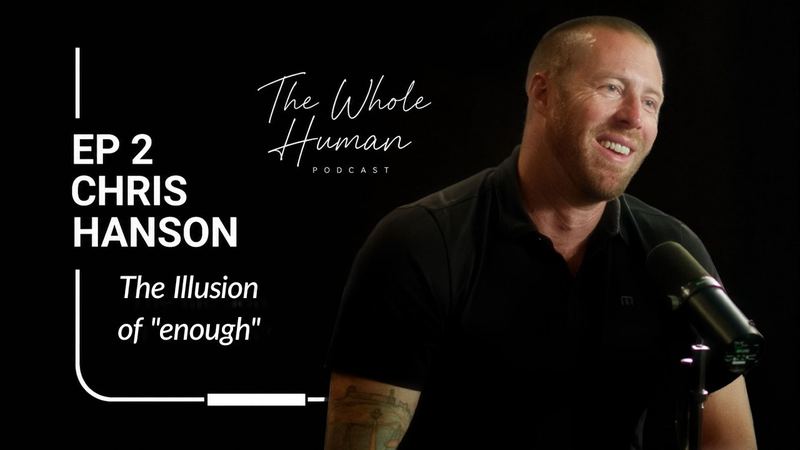
In this episode
Andy and Jay sit down with Chris Hanson of Hanson Capital Group in Oregon — a father of two who went from cash-advancing a credit card to buy a $36,000 foreclosure to managing a few hundred million dollars of industrial real estate — to talk about why the first million, the tenth, and the fiftieth all arrived without confetti. Chris shares the two medical crises that woke him up, the question he and his wife keep asking (“what is enough?”), and why he wouldn’t switch off pain even if he could. The conversation moves through contentment versus happiness, the three kinds of relationships, and the one thing Chris would tell a room at the end of his life.
Key takeaways
- “You set these milestones, and at each one there was no confetti.” Chris hit $1 million, $10 million, and $50 million of liquidity and felt no change at any of them — even while warning others that the first million wouldn’t be enough.
- The chase never stops on its own. Leaders run toward the future either fleeing old pain or chasing significance. As soon as the goal lands, the next one is needed to feel that life is worth waking up for — and pausing feels worse than chasing.
- “If you can want less than you have, happiness is there.” Chris borrows Arthur Brooks’s equation (have minus want) and argues contentment, not happiness, is the better target.
- “What is enough for us?” Andy and his wife spent two years on that question and found they needed far less than they thought — which turned everything else into the cherry on top rather than a need.
- You already have what you need. Jay’s blue-sky image: storms roll in and hide it, but the sky is always there. Take the success away and you still have your people, your passions, and your breath.
- Pain is the tunnel to purpose. A daughter’s leukemia and a father’s death two years later reshaped Chris’s business, his relationships, and his perspective. “Is this good or bad” is a choice, not a label.
- We tolerate business pain but flee emotional pain. Three kinds of relationships — pouring down, paying up, and face-to-face — and why the face-to-face kind is the one most leaders avoid.
- “It’s not letting go, it’s handing it off.” Chris’s one-talk theme is “it’s going to be okay.” Andy’s take: you can only let go if there is something bigger to hand your life to.
Chapters
Transcript
Auto-generated from the episode and lightly edited. Timestamps mark the start of each section; a new line marks a change of speaker.
00:00
That experience really woke me up. Take that success away — then what are you left with?
You never stop the chase. Then you go through your whole life, 30, 40 years, and you go, “Jeez, what’s the point?” I remember the feeling of the stress, but I don’t remember what I was stressed about. So it’s like, man, what a waste of time.
If you can want less than you have, happiness is there. And you had one talk you could give to them at the end of your life — what would almost be the title of that talk? Chris, thanks for coming on. We have known each other for a couple months now, and it’s been really fun to get to know you in all of our conversations around purpose and connection and relationships and work and business. We’re just excited to hear a little bit more about you today. So why don’t you introduce yourself and tell us a little bit about who you are and what you do for work, and then we’ll dig right in.
01:12
Well, thanks Andy, thanks Jay, for having me today. Chris Hanson from Hanson Capital Group in Oregon. Forty-two, turning 43 this week, father of two, and figuring out life still on a daily basis.
What do you guys do at Hanson Capital? Tell us a little bit of the backstory there and how you got into that. So after college I got into mortgage banking — that was in 2005 — wholesale pools of mortgage loans with Wells Fargo, and in a way that slowed rather rapidly. I ended up jumping into commercial real estate, starting with residential real estate, but distressed real estate, foreclosures, all that kind of stuff. I bought a property at the foreclosure auction — cash-advanced my credit card and paid 36 grand for this house — and then started renovating it to fix and flip. Kind of a long story to how I got into that spot and wanted to buy a house, but that’s grown into today. We manage a few hundred million of industrial real estate, predominantly. We’re in escrow on four deals for $120 million right now. We just had a big exit to a JP Morgan-backed group to sell a bunch of our first industrial fund assets. But within Hanson, we’re that asset manager. We also run a property management company that does all of our internal property management, and then we also have a mortgage bank that does hard money lending and commercial capital markets work for ourselves and external customers. A lot of people would hear all those phrases of private equity that mean nothing to anybody.
A hundred million dollars here.
03:07
Yeah. Well, a lot of people, I think, would be like, “Man, you’re set. You must be happy. You have it all. You have what you want when you want it, when you need it.” Walk us through your journey around this whole idea of what money means, because we’ve actually had quite a few conversations around that — being able to have a lot at your disposal, but your relationship with that has really changed throughout the years. Walk us through what changed and how it’s changed.
Well, I mean, you nailed it. I have it all figured out and it’s easy. Life is perfect every day. The money’s there and everything’s solved. But aside from that, I think probably the biggest epiphany or eye-opening experience for me was I still don’t feel like I have any, or have enough. So there’s some sort of inner childhood thing of, I wanted more, I didn’t have it, and I’ll go work really hard to get it. But there was an event I remember very distinctly — the first time I had a million of liquidity and became a millionaire — that I thought would be a really big event. And similarly with 10 million and 50 million. You set these milestones, and at each one there was no confetti. Nobody jumps out. There’s literally no change. It kind of reminds me of when somebody passes and then you have that next day, maybe a week later, where you’re just like, huh, the world doesn’t stop. Nothing changes. The financial resources that I chased — it was a long time. I was at least 40, so I think I’d been doing it 20 years before I realized, hey, I probably can do just about anything I want. I started doing some of those things and just realized that’s not as fulfilling as I thought it would be. And this is coming from somebody who would tell people, “Hey, don’t get too excited about that first million, because it’s not going to be enough.” Or, “Don’t get excited about 10 million. It’s not going to be enough.” Because they’re fleeting achievements, basically.
05:19
I heard Matt Damon talk about when he and Ben Affleck won an Oscar for Good Will Hunting. They were super young. It was their first big film that they had done, and they won these Oscars as these young kids, basically. And Matt Damon was talking about how he’s glad that they won it so early, only to understand that it’s not worth anything. Because there are other actors that don’t get an Oscar until they’re in their 60s or 70s, and they build their whole career to finally win this award. And for him, when he won it, it was almost like he realized this isn’t something to chase after.
This award is not going to make me. Sure, it opened up opportunities for him. Sure, it probably made his career excel. But for himself, that award was not fulfilling.
Yeah. It’s funny. I’m not a big sports guy, but I like watching autobiography-type stuff of people who are at the top of their game. And last night I saw something that was Reggie Miller.
06:35
And he was talking about not having got the championship. He was talking about how he had been so close but he’d not won it, and he was talking about the emotion of working for the people on his team that he was playing with — guys with broken shoulders and that kind of stuff — that that’s what was driving him to push harder. But he feels like his career was a failure because he was in the finals and didn’t win, multiple times. So it’s the exact opposite of what you’re describing. That guy chased his whole career the chip that he never got…
…and feels like he failed, whereas anybody else could be like…
Reggie Miller’s not a failure. Right.
When you watched that, did you resonate with that, and how so?
07:20
Yeah. I didn’t think of it in the context of this conversation, obviously, of, hey, he was still a success. I could relate to having been in the game and not felt like you won. Because we’re 60 days out of this JP Morgan transaction, which is significant for guys in my space, in the commercial real estate space, to buy assets when we did — we bought them in 2020 through ’22 — and now just sold at a just over 4x multiple on capital. That’s an unheard-of result. And to do it during this time frame — I talk to guys a lot in our space and they’re like, “Congrats, you’re the only guy who made money during that period of time.” It was significant. A big personal liquidity event. And as we’ve talked about, I bought myself a watch. It was so unfulfilling personally, right? Because it didn’t really feel like that big of a win, even though it’s significant in every sense of the word. A lot of people have said that’s the crown of your career so far. And to me, it was just like, well, we put a thesis together, we did the work, we executed on the plan, we got the result. It was good. It didn’t change anything. I feel like that resonates with a lot of what I see inside of leaders.
The future — they’re running towards the future by fleeing from something in the past, or by chasing something that they feel like they need in the future. So they’re either running away from something — a feeling of insecurity, a feeling of not good enough, a feeling of the pain of the past — and they just want to run fast so that they don’t have to think about that, they don’t have to feel that, they don’t have to ever feel vulnerable again. That’s often why they’re in positions of power, so they don’t have to feel vulnerable like they had to feel vulnerable so often. So they’re either running from that, or they’re chasing significance, purpose, to be enough, to feel enough. And I think what’s hard about that second one, the chase that you’re describing — and I know I’ve experienced it and a lot of leaders have experienced it — is as soon as you achieve what you thought was going to be the thing, you need the next goal in order to feel empowered or excited, or that life is worth living. So you never stop the chase, because you need the next thing in order to feel like life is worth waking up for. But then you go through your whole life, 30, 40 years, and you go, “Jeez, what’s the point? All I did was chase the high and the win, and I never got what I needed.” But to pause and rest and wait is actually a worse feeling than continuing to chase the next high.
10:08
And it’s often because we don’t know what we want. We don’t know who we are. And we really don’t know what it means to feel fulfilled in life.
Yeah. And as you go through that journey and as you’re discovering — and we’ve talked a lot about this — what are some inklings that you have about what the purpose of life is, and what truly brings fulfillment outside of money and success? I think I agree and relate to what you’re describing of that pursuit, because as a competitor, whether it’s athletics or business or anything else, it feels like a competition — not even with somebody else, but with myself. So it’s like, okay, that trophy’s won, what’s the next one? I find fulfillment in odd moments. I’m not an unhappy or depressed guy. I feel like I’m a pretty happy, joyful guy in general. But I do have those moments of pure contentment, of, okay, this is why I work hard. Unfortunately for me, most of those come at very expensive intersections — like having my family on the jet headed on a vacation — those ultra-rare moments that are not very long, but it’s like, okay, this is what I worked really hard to do, because this is a neat moment of reflection.
11:35
But I find a lot of joy when I can find that contentment. I think happiness is fleeting, and I think contentment is maybe a better target to aim for. There’s a guy, Arthur Brooks at Harvard — professor of happiness, I think, is the course he teaches — and I may be giving the credit to the wrong place, but he has an equation of basically: happiness is the things you have minus the things you want. Meaning, if you can adjust your numerator instead of your denominator — if you can want less than you have — happiness is there. Being content with what you have as opposed to what you don’t have. And the other guy who I think speaks to this from a different perspective is Dan Sullivan of Strategic Coach: bridging the gap or closing the gap. If we’re always looking at that horizon, you’ll never get to it. Getting comfortable in that space in between. An important question that my wife and I have had through the last two years specifically is — business has gone well, and we’ve been in a better space than we’ve ever been before, and there’s always potential to grow — but this question of: what is enough for us? We look at our home, we look at our cars, we look at where our kids are at, we look at community, we look at money, and we’re like, what is enough? And one really cool thing that’s taken place over the last year is when we dug down to it, we realized we really did not need a whole lot to actually feel happy and content in life. And I do think that’s a byproduct of the last 10 years of work that I’ve had to do on myself around where I place my identity, where I define my sense of worth, how I work on my sense of purpose and build authentic and meaningful connections. I don’t know if I would have been able to say that this year without the 10 years of work on myself to get back to letting go of all the things that I grabbed to define my sense of worth or meaning in life. But when we defined that, when I said that, it was an extremely freeing experience, because then everything else in life is like the cherry on top of the cake. It’s more about fun and passion and play than it is about trying to keep up with the Joneses, or trying to have the thing, or I need the thing. It’s just, no, I want the thing for fun.
I want the trip just because I want to have fun. I want to have exploration. I want to have an adventure. But do I need it? I don’t need it, but I’d love to have it. And that’s, I think, a delicate space of contentment that is beautiful to find when you’re able to find it.
14:25
Yeah. So there’s that really famous study on money saying that beyond 75 grand of annual income, it doesn’t lead to more happiness. Are you familiar with it?
I’m not.
Okay. We’ll have to get links to this, because it was the classic “money doesn’t make you happy” statement, and they pointed to this study that was done in the early 2000s, maybe. Last year there was finally some bigger study that said that’s nonsense. It’s absolutely not true. People with higher incomes — it does lead to more happiness. It debunked this whole thing. And I loved that, because I was always like, that doesn’t make sense to me. There are people who are happy with lower incomes, but I don’t know that happy is the right word. I think they’re content. They don’t have the ambition or the drive to go get more. They’re content where they are. So it’s not that they’re happier. They’re just content. And I’ve had envy. I have a college buddy who works in education, and our parallel paths are very different financially, but his contentment and life quality compared to my own are not dissimilar at all. He’s probably more content than I am. So I’m striving to get where he is in that regard. Or that other saying about the Mexican fisherman.
15:52
Are you familiar with that one?
I love that. Yeah. The Mexican…
Yeah. The American comes down and he’s like, “What do you do?”
Oh, it’s good. Do you want to tell it?
Tell it, man. Yeah.
16:02
So there’s an American traveling down to Mexico and he meets this fisherman. He’s having a conversation and the guy’s like, “What do you do all day?” And he’s like, “Ah, I fish, just so I can feed my family, and I get up when I want and I hang out with my family. I play guitar with my friends. Life’s great.” And the American’s like, “Oh, well, you should get a second boat, and you should start hiring people, and you could build this big business, and then in 10 years you can sell it.” And he’s like, “Well, why would I do that?” He’s like, “Oh, well, when you sell it, you can sleep in late, you can hang out with your family, you can play guitar with your friends.” And that’s the American mindset — oh, you just got to do more, more — and this guy’s like, I already do all that. So I think I got stuck on that path, the “let’s just build it and make it bigger,” and it’s only been recently, I guess, that I’ve accepted, okay, there’s nothing that’s going to meaningfully change the future financially — or, that’s not true. I could certainly meaningfully change the future financially. I don’t know that it would lead to a different happiness reflecting back from 80. Would I be happy that I traded more life for X million? Debatable. Probably not.
17:26
A quick break from our sponsors.
Most leaders have everything on paper and still feel empty inside and distant from the people they love the most. Not because they haven’t done enough, but because they’ve never stopped to slow down and ask the deeper questions: Who am I? Why am I here? What do I actually feel? Most high performers skip right past those questions and spend years building a life that looks full on the outside, yet feels empty and unfulfilled on the inside. My book, Uncover Your Purpose and Identity, is built for that exact reason: six chapters that help you discover your purpose and redefine who you are and what truly matters. This process takes you from foggy to grounded and empty to fulfilled. I’ve worked with leaders across the country — business owners, athletes, and executives — and the pattern is always the same: outward success, yet inward drift. This book is the conversation most of them wish they had 10 years earlier. If you’re ready to stop running aimlessly and start living with real clarity and connection, pick up your copy on Amazon. Search “Uncover Your Purpose and Identity.” You’ve built a lot. Now build the one thing that brings lasting fulfillment: a life of purpose, meaning, and connection.
And back to the episode.
18:50
There’s this concept — do you know who Andy Puddicombe is? He started Headspace. So I do these runs and I use the Nike Run app, and Nike Run partnered with Headspace to do these guided runs to help you clear your mind, and they’re really great. One of them has this idea — and I actually did a commercial for Nike Run and I used this specific Headspace guided run — where they talk about the blue sky. Picture it: the blue sky is everything you need. Sometimes clouds come. Sometimes there’s a little cloud that comes and you might fixate on that cloud, and then it goes away. Sometimes there’s a storm that rolls in and you can’t see the blue sky, but it doesn’t change the fact that the blue sky is still there. It’s behind the clouds. And the whole idea behind it is we always have what we need. We may not always see it, but it’s always there, just like the blue sky is always there. A storm will come and we may feel like we can’t see it, but we still have what we need. The storm is just altering our vision of it, and it’s up to us to decide if we focus on it or not. It’s up to us to decide: do we let this storm make us afraid? Do we let this storm make us feel like something bad is going to happen, a tornado is going to come, or whatever? Whether it does or it doesn’t, the storm passes. But the blue sky doesn’t pass. It’s there every single day. And it’s one of those things where whether we have money in our bank account or not, it’s that idea of “this too shall pass.” Whether we have all these awards and our business is thriving, or we’re struggling and our business is suffering, we still have what we need. We’re still here, living, breathing. You still have your two kids. We still have the people around us. Money comes and goes, but at the end of the day we still have these people in our lives. We still have these passions and these desires. And it’s so easy for us to tie our identity to our success, but take that success away — then what are you left with? I’ve really been learning a lot about that: success does not define my purpose. Success does not define my meaning. I was going on a walk with one of my kids two days ago, and I like to ask him this question. I have four kids, and they want to do individual stuff all the time.
So I get to do these walks individually with them instead of in groups, and I get one-on-one time with them, and it’s so special. And I’m sitting there with my third kid — he’s nine; I had to really think about how old he was — and I hadn’t asked him this in a while. And I’m like, “So, dude, what do you want to be when you grow up now?” And he said the most complimentary thing without trying to compliment me. He’s like, “Well, I’ve been thinking a lot about it lately.” Before, he wanted to be a race car driver or a car designer or something like that. And he’s like, “I think I want to be a dad.” And I’m just like, “What do you mean?” He’s like, “Well, I see you, and you have fun with us, and that’s what I want to do when I grow up.” I’m like, man, that’s my little blue sky moment right there. And it has nothing to do with money. It has nothing to do with success. It has everything to do with me just being a dad.
22:31
Human beings have learned how to adapt over and over to different changes and times, whether it’s the Great Depression, whether it’s the Industrial Revolution, and all these different things. And I think the conversation we’re having right now is an important conversation, because human beings are going to have to adapt. I think more than anything, Americans are going to have to adapt, because of what we’re talking about around money and success and performance and getting stuff done — we’ve had lots of conversations on this. The relevance of the whole concept of money could change. The relevance of where you find your sense of success in a day, based on how many things you got done and accomplished, may greatly change. You might actually not be the producer anymore. You might be the receiver. And that’s a weird position for us as Americans, who are very independent and make a name for ourselves as always the creators, always the producers. What if AI and technology and humanoid robots become so advanced that we become the consumers, the byproduct of abundance rather than the creator of the abundance? I think that’s going to change a lot of the way we see and make sense of who we are. And this conversation, I think, is extremely relevant, because we’ve spent the last 20 to 30 years reinforcing this idea that our title, what we do, and how much we make is a definition of who we are. It’s starting to have to shift, where people are having to find something deeper on the inside about what wakes them up in the morning, what keeps them going. To me, I typically see that as: there’s purpose on one side — what is my purpose? — and the way to get there is typically through two different tunnels. The first tunnel is through our pain. When we go back and look at where we experienced pain, it defines our passion, and our passion gives clarity to our purpose. So this makes me want to ask you the question, Chris: where have been maybe one or two places of pain in your story that, when you go back and deal with those places of pain, or heal them, or even acknowledge them, somehow they ignite a passion in you to do life a different way, to show up a different way, to love your kids a different way?
What are moments in your past that have drastically shaped who you are today for the better? Two of them, and they’re both around medical issues. The first one was in 2018: my daughter got cancer. It was wild. I was meeting with a YPO mentor — I was in EO at the time, so I had been assigned a YPO mentor. It was our first meeting, we were at my office, and my phone kept ringing. It was my kid’s mother, and I muted it because I wanted to respect his time. I was explaining this hierarchy of my business at the time, or businesses, and he was like, “The awesome thing about this, Chris, is it’s complex, it’s cool, it makes money — that’s all great — but your risk is it requires you.” And when we wrapped up that meeting, I took that phone call and drove to the hospital, and it led to about a 10-month inpatient issue for my daughter. She had acute myeloid leukemia. She wasn’t allowed to leave the hospital, and it threw work upside down. That was the big wake-up of, hey, this could be gone. So I didn’t quit, but I backed out of what we did. That is actually what led to us buying the first industrial property. It was a big shift. I had been an apartment investor, which was value-add — improve the apartments, resell them — and it had been more time-consuming for me at the time, and I’d never bought a triple-net piece of real estate.
26:24
Those are, in theory, a lot easier, because you own it, the tenant sends you money, and if there’s a roof issue, that’s their problem. You don’t do anything else in triple-net real estate. So that was the first one. We lived in the hospital. I’d alternate with their mom — I’d be in there a day or two and then we’d swap for a day or two. And when I came out of that, I was like, all right, I need to build infrastructure and team. I won’t say I was a one-man show, because I wasn’t — I’d had 15 staff or something — but that experience really woke me up. And then it was only two years later that my dad got sick with cancer, and he passed from it in a really short period of time. I’d watched him want to do certain things his whole life but not necessarily do them. He was financially very conservative, saving, and I was a little wilder with my financial habits. I work really hard, really diligent and responsible, but my outlet would be, I’m going to go buy the car I want, or something like that. I grew up around motorsports with him, and I compete in motorsports, so that’s my outlet. Well, he wanted a particular Porsche his whole life, and he finally bought it, and he got sick like a week after that and never got to really enjoy it. So that was difficult. That sucks, right?
So the lesson there was, hey, you could be prepared and diligent your whole life and you could get a phone call that you’re not…
You’re going to die.
28:12
Yeah. It’s hard. I think we are creatures of control…
It’s not me.
Yeah. But we want to have everything planned out, and we want to have security, we want to have safety, we want to have money in the account, we want to have the next five years planned out. We want to have our goals going in line. But then, gosh, I feel like the last 10 years, nothing has gone to plan. And it ends up working out better. There have been challenges — like with your daughter, gosh, I couldn’t imagine something like that happening, but I’m sure that it built some sort of connection and growth in you that you may not have ever gotten had that not happened. Not saying that should have happened, but I’m finding more and more that the more I let go of control, the more it opens me up to potential I didn’t even know was inside of me.
29:14
Yeah. People would frequently say, “I don’t know how you’re dealing with that.” And it’s like, a choice? Nobody asked. You just get to do it. So it was really tough. But that was one of those big moments, in hindsight, that did change her and my relationship. It changed my whole perspective on the world, and I would say for the better. I’m not going to say cancer is a good thing, in any sense of the word. But it’s where — and I think you and I have talked about this — that perspective of “is this good or bad” is really a choice or a mindset, because those labels of good or bad — it just is, right? You could go on a drinking bender for a year and people probably wouldn’t blame you. I chose to work out and get in the best shape of my life. Those were all choices from: here are these circumstances that are happening, how do I want to respond to it? It was just one of those impactful events where you can’t unlearn those.
Moments of pain shape what you focus on as your passion and what defines what matters most in life. You brought up these two beautiful stories — very difficult stories — but I can tell they’ve shaped who you are. On the other podcast I was doing, we posed this question, because with Neuralink and some of these other procedures going on, there is a potential in the future, maybe 10, 15 years from now, where we will have the option, by the click of a button, whether we want to minimize suffering and pain and sadness and maximize pleasure and joy by modulating the neural synapses in our brain — dopamine, serotonin, oxytocin. We may be able to modify those. This is sci-fi, but it’s also becoming more of a reality as we learn more about the brain and what we can do with it. And when I ask people, “If you had a choice to shut off all sadness and amplify joy and excitement, would you do that?” people really sit with that. And a lot of them say no, which is weird, because you have these extremely difficult situations in your life. I had a very difficult situation where I had a condition called hyperhidrosis, where my hands, my feet, and my armpits would sweat profusely. I still have it on my feet, but I don’t have it on my armpits and hands anymore because I had a surgery when I was in junior high. But I had that for a long time, and it was extremely socially isolating. I couldn’t even touch people’s hands. I had to bring extra shirts to school because my shirts would have these huge rings of sweat. I couldn’t do my homework because my paper would get instantly wet. The amount of social isolation and pain that brought — I remember sitting there watching these healers on TV, on channel 21 or whatever, where they’re healing people, and I’m praying to God. I’m like, “God, why did you give this to me?” And I’m just crying and praying, just heal me. Why do I have to have this? Why do I have to suffer with this? I didn’t do anything wrong. I didn’t do anything bad. And yet I have this condition that makes me suffer. And now what I realize is that has made me so empathetic and attuned to the sufferings of others. It made me so soft. It made me so connected to other people who suffer, because I know what it’s like to feel lost. I know what it’s like to feel lonely. I know what it’s like to feel hurt. And I think if we lose pain, we lose the opportunity for empathy and the ability to find purpose and meaning. It’s this weird dyad: can you have purpose and meaning without fully embracing the purpose and meaning of pain in our life? And I really don’t think you can.
32:59
At least I haven’t figured out a way to splice those out. But I do think pain is an essential part of our joy. And when we’re always chasing a dopamine high, we miss the opportunity to really experience what you’re talking about, this deep fulfillment.
My answer would be no. I wouldn’t want that app or that control.
And it almost comes back to the money side of it, what we were just talking about. I think some of the…
I’ll say, turning down the brightness of the game of business is when those rewards — because I think most really wealthy guys — I’m not talking me, like real rich guys — they’re playing a game, and they’re just keeping track with a scoreboard in their bank account, right? Any video game you ever played as a kid, once you beat it, or once you used a cheat code or something, the novelty wears off instantly. It’s not fun. And I think I’ve experienced that to some extent on the business side of it. I can make pretty good-sized checks and it’s still Tuesday. It didn’t change anything. They were way more meaningful at the start of the game than at the end of the game. I think it’s awesome that they can do it, that that technology exists — I’m sure there are applications for it — but I would be so adamantly against that for people I’m close to, being able to manipulate those, because how could you…
34:22
Because what do you think pain gives us in life? And this is a question for both of you. What does pain give us in life that it would almost be like a death sentence to our existence to get rid of it? Well, I see two ideas pop up in my head. One very simple one, which is — you talked about working out and stuff — in order for your muscles to grow, you have to tear them down. So that pain is essential to muscle growth. You cannot have it without some sort of breakdown and pain. So in order for there to be growth, there has to be the breakdown. There’s that idea. But then Alan Watts has this famous talk, and it’s called “Nothingness,” and the whole idea is, in order for there to be something, there has to be nothing, because you can’t have something without nothing existing. And it’s the same thing: in order for there to be happiness…
…in order to enjoy happiness, you have to know what sadness is. Otherwise happiness is kind of meaningless.
It’s not measured against anything. So you can’t amplify it or measure it.
35:33
Yeah. It’s just a feeling at that point. So I feel like you have to have these — and we call them negative emotions, and I’m not sure that they’re necessarily negative. I feel like they’re emotions.
Yeah. I feel like they’re just essential emotions. You have to have pain in order to appreciate the good parts in life. You have…
You have to have the contrast.
Yeah. You have to have the contrast, otherwise it’s…
And most leaders, I would say, if you ask them — one of my philosophies is pain is the pathway to growth — they’d say, absolutely true. I know what that feels like in business. I know what that feels like in fitness. I know what that feels like in my money and all these things. But then you talk about: when’s the last time you cried in front of someone? When’s the last time you didn’t just tell them you had a hard week last week, but looked at them in a moment and said, “I’m having a hard week right now. I’m suffering and struggling right now. I don’t know what to do. I don’t know where to go. I feel lost and I need help”? And they’re like, that doesn’t happen very often. Because that’s a different kind of pain…
36:39
…that we are not tolerating in American society. We’re tolerating the pain that gets us to growth in success and business and physical health. We don’t know how to tolerate relational discomfort, conflict, repair, emotional needs, hopes and dreams, fears, and emotional pain inside of ourselves. So I’m really curious: why do you think so many of us are so comfortable with the concept of pain in one category of life, but then completely avoid it or run away from it when it deals with relationships or our emotions of sadness or fear? As a guy who runs from emotional closeness…
…at breakneck speed. Yeah, I don’t know. I agree with you — pain is a teacher, or I win way more from my losses than my wins — all those kinds of sayings are frequent for me. But maybe it’s a male thing. We’re taught to be less emotional, have less feelings, display them less. I don’t know why that’s so much more difficult. But I find with my kids, I’m really encouraging them to be in touch with those emotions and feelings and having those discussions. With my wife or romantic partner, it’s harder for me to reconcile those differences when emotions get involved. I know how to coach my kids. When I see my partner struggling, it’s harder to say, “You should just do this,” because I’ve never made the right suggestion. Maybe I don’t use the right words. Women are certainly a mystery to me, at least in how to navigate those kinds of challenges.
Well, you’re describing three types of relationships. There are relationships where we play a role to pour into others — children, or people we mentor, or people on our team that we’re there to coach, mentor, guide, support. It’s a downward stream. We’re typically comfortable in those because we possess power and control, and it’s not vulnerable. And then there are other relationships where we literally pay people to play a role above us, to guide, coach, and mentor us, which isn’t bad. It’s just part of the game. But it’s also not super vulnerable, because we’ve literally made contracts with people: you’re here for me, to support me, and I get to process and talk. I think that’s good. But the third category, that people are most uncomfortable with, is face-to-face, same-level relationships. Not one up, not one down. Face to face, where it’s fears, frustrations, dreams, hopes, pain, sadness, and it’s right here, right now. Equal-level playing field. That’s what emotional intimacy means. And I think many of us really struggle at times to know how to do that well, because it’s so freaking vulnerable. It’s so risky. It’s so hurtful. But at the same time, C.S. Lewis has this beautiful analogy where he says, if you only open up this much to love, when love flips over into hurt, it can only hurt you this much. So love…
39:57
…is a protection mechanism. If you open up to love this much and you give yourself fully to someone, when it flips over to the opposite end of the spectrum, how big is that gap of pain? It’s massive. So we often love little because we don’t want to hurt much. But I’ve found that the fullness of life comes by really opening up to that vulnerability of love, and that resilience to know: I am going to be hurt, but I have the skills and the ability to work through that. Relationships are better not because they don’t have fractures, but because fractures have been healed. To me, that is around the idea of purpose and meaning and what’s significant: learning how to have face-to-face relationships where there’s vulnerability, deep love, but you also sign up for deep hurt.
Interesting. You threw a lot out there. All of those pieces make sense to me about the three-hierarchy thing. Those peer ones — I can think of relationships where I’m subordinate, with mentors or something, people I talk to for wisdom, and those are easy. And the downstream is where I spend most of my time, probably, with employees and other people. But those peer-level ones — that’s where I have the least experience, I feel like.
Well, when I think about your little tier, and you’re talking about mentorships, people who are pouring in — there is a sense of, I don’t want to say superiority, with the mentor. But there’s another thing I think about, of why we experience pain, and I think part of it is also to help others. I don’t remember what movie this is — I’m so bad at remembering my references — but I just saw a little scene from this. Basically, these two guys are talking, and he gives an example of a man walking down the sidewalk, and he falls into a manhole, and there’s no ladder or anything. He can’t get out. So people are walking by, and somebody walks by — it’s a doctor — and he’s yelling, “Help! Help me! Help me!” The doctor looks down, writes a prescription, throws it down the hole. “What good is a prescription going to do me? I’m stuck here in this pit.” A therapist walks by. The guy’s like, “Help, help, help.” And the therapist is like, “Oh man, how are you feeling down there?” And he’s like, “I’m stuck. I really need to get out. Can you help me get out?” And the therapist is like, “That’s great that you’re able to acknowledge those feelings. Think about that for a little bit.” And then he walks away. A pastor walks by, and he’s like, “Oh, please help me.” So he writes a prayer and throws it down the manhole. And he’s like, “Oh my gosh, what is going on?” Then he sees his friend walk by. Say his friend is named Joey. And he’s like, “Joey, help me. Dude, you understand me.
42:54
Help me.” What does Joey do? He jumps in the manhole. And then the guy’s like, “Dude, you idiot. We’re both stuck in here.” And Joey says to his friend, “No, man. I’ve been down here before. I know how to get out. Let me help you get out.” And to me, I see that not as the mentorship-type thing of “let me guide you in this experience,” but, man, your pain I’ve experienced, too. Let me be here for you, and let me help you get out of this. Let’s do this together. I think that’s a good reason why we need to feel these essential negative emotions: not only does it help us grow, but it gives us the opportunity to help others grow and help others get out of that manhole.
Yeah, that’s a cool story. What do you feel like — if you, Chris, were with a group of people, and you had one talk you could give to them at the end of your life to inspire, to encourage, to guide — what would almost be the title of that talk?
No prep, just sum up your life with a title on the spot. Sure.
I know. You think about it all the time.
44:17
Yeah. I mean, I’ve been debating which one to go with. The title…
Or what would the theme be?
Yeah, the theme. I’ve learned a lot of things in my 42 years to date. But I think — and it’s ironic, because my parents told me this and I didn’t understand or believe them — I think I would tell them to just relax and go with it. Because, as we were talking about control earlier, Jay, nothing in the last decade’s gone how you planned it, and holding on tighter or pushing harder may or may not have impacted that, but you said you had some relief there. I’ve learned that in my own unique way. I’m a bit of a planner. I like to make a plan and then go execute on it. And you know that saying — everybody has a plan until they get punched in the mouth, as Tyson likes to say. I guess it depends who our audience is — my kids, my family — but I think that message would be universal: just let it be. It’s going to be okay, regardless of the direction. I know that’s not the most…
45:41
So everything’s going to be okay. And how would you explain to someone, if they asked, what do you mean by okay?
It’s going to be acceptable. It’s not going to be unacceptable, because you’re not going to be responsible for it. That good or bad is, again, our own labels we apply to things. So everything just is. If it’s okay, it is what it is, man. I’ve got sayings to stack on top of sayings right here. But does that make sense at all?
Like, meaning it’s going to be okay.
It’s almost like you have to submit to something outside of yourself that has more control than you do. Whether it’s an energy, a higher power, a system, a person — whatever it is for you — for someone to be able to say all of life will be okay, which means it goes in the direction it’s supposed to go and there is potential for peace, love, happiness, and joy there. To me, if I was to define what the okay is, it’s that I could let go of my life and somehow there’s beauty, goodness, love, connection, and purpose at the end of my road, for me and for those I love the most. And in order for me to believe that, I have to believe that I am not in control of my universe, and that there’s something outside of me that is — whether it’s a spouse, whether it’s a friend, whether it’s a higher power. I think that is one of the most important places, going all the way back to this idea: we will not learn to let go unless we have something to let go to. You can’t just let go into the random air. You’ve got to hand it off. It’s not letting go, it’s handing it off. I think that’s a really important concept around contentment, peace, and letting things go: don’t let them go, hand them off. But you have to have something to hand them off to that is smarter than you, better than you, more loving than you, and somehow has an understanding of how the whole world and life makes sense.
47:58
Otherwise, it’s just hard. You guys know that “pale blue dot” thing from Carl Sagan at all? So there’s Voyager 1 or Voyager 2 — one of them — that was sent off into space to go outside of our solar system. And there was this one image where it had taken a picture of Earth, and it’s this teeny tiny little blue pixel in the blackness of space. And Carl Sagan — he’s this astrophysicist — talks about how right there, all of our wars have been fought, all of our leaders have been there, every single person has lived and died there. And it’s this interesting perspective of, it’s almost like none of this matters. We are going to live and die. That’s…
Nobody on this planet is going to live forever. We’re going to live and die. And then it’s having this perspective of, this life is such a rare, beautiful gift. And when we start to get that idea — the chances of all three of us even being alive and being the people that we are is so rare. We have more of a chance of winning the lottery 500 times than actually being…
This time, this space.
This time, this space, our stories, meeting the people. It’s just…
49:30
And it’s so special, and we just move through it so fast.
Yeah. I created these videos for these boys, and in one of them I was talking about generosity. I talked to some of them and I said, “What’s the first thing that a baby does when it’s born?” And they’re like, “Oh, it cries.” And I’m like, “No. In order to make an audible sound, you have to have breath in your lungs. When you speak, you move air out. You don’t inhale air when you speak. So you have to take a breath in.” And I said, “What is the last thing we do when we pass away?” That breath goes out of our system. We breathe out. So from birth until death, we breathe in and we breathe out. That really is a model of why we’re here. The purpose of life is to receive gifts that we have not earned — the beauty of life that we have not worked for, that we just get as a gift — and to give those gifts of love, generosity, hope, and care to the people that matter most, the people that we love and lead. That, to me, from birth to death, gives us a picture of what we’re supposed to do here on earth.
Our time has come to end our podcast. I think you asked a great question with the theme of — whatever that question was. That was a good one.
50:43
Yeah, I think we should end it with maybe one of those questions and put his answer on the end.
Not the “it’ll be okay.”
Not that one.
Well, because it also makes me think of the blue sky thing, too. In the end, it’s going to be okay, because we still have everything we need.
It’s crazy.
51:02
Well, I would rephrase it a little bit, though: to not be so serious. Because I think what you’re saying — and you were saying it too, to some extent — is it’s almost insignificant. It doesn’t matter. But we get so worked up by being so serious in our own mind. We’re making it really important. Your little blue dot ties back to whatever we’re dealing with that we’re worked up and angry or yelling about. It’s so irrelevant…
…whatever that issue is. I’ve brought this up before on previous talks. I remember when I turned 40, I was reflecting on my life, and I remember times where I was just so stressed and overworked, but I don’t remember what I was stressed about or what I was working on. And it’s like, what a beautiful…
But it’s like, what a simple way to see how unimportant it was. Because I remember the feeling of the stress, but I don’t remember what I was stressed about. So it’s like, man, what a waste of time.
The Whole Human Podcast
Watch this episode — and every episode.
New conversations on staying human and whole in a world that keeps accelerating.